


You spot it instantly, the elegant lines of a sculpting bodysuit, the delicate lace of a seamless brief, the promise of a flawless silhouette beneath your favorite dress. Design draws us in. But once you slip shapewear on, it’s not the stitching or the cut that determines your experience it’s the fabric.
Will it breathe during a long workday? Will it retain its shape after the tenth wash? Will it support without suffocating? These questions are answered not by aesthetics, but by material science. And for many women, the greatest shapewear disappointments stem not from style, but from fabric that fails: elasticity that fades, seams that dig, correction that collapses after a few wears.
Understanding the role of key fabrics polyamide, elastane, cotton empowers you to choose shapewear that truly works with your body. Beauty matters, but comfort, breathability, and durability matter more. Let’s explore what each material brings to the equation and how their thoughtful combination creates underwear that supports you all day long.
Polyamide: Structure with a Caveat
Polyamide (often known as nylon) is the backbone of sculpting shapewear. Its inherent strength provides firm compression, smooths contours, and maintains a defined silhouette making it essential in bodysuits, high-waisted briefs, and structured corsets.
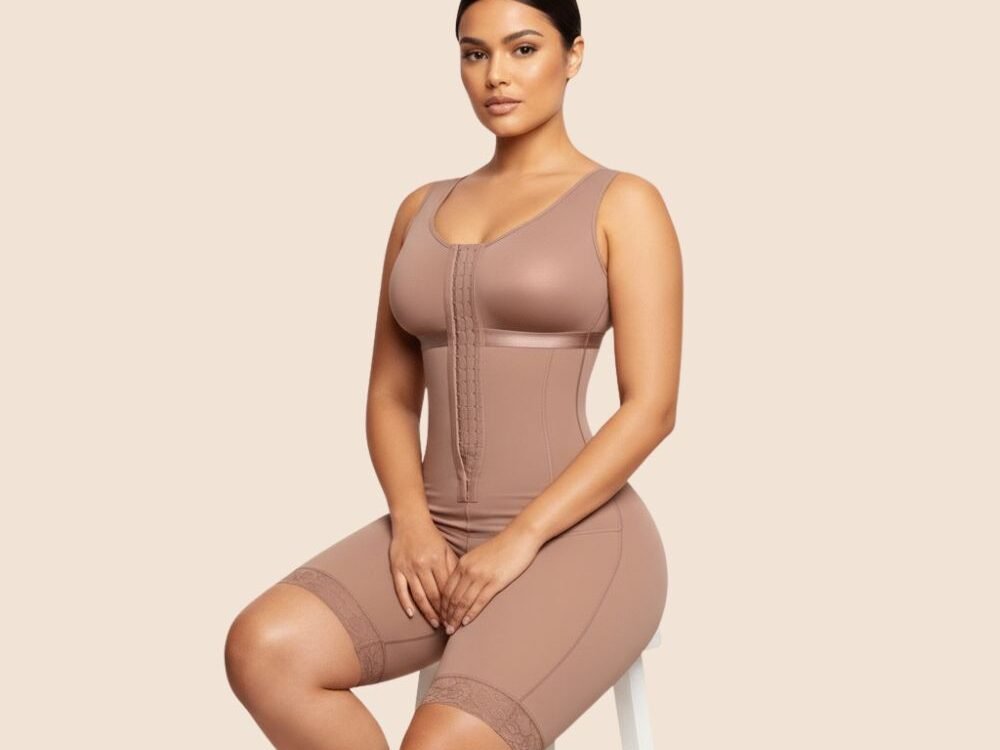
Yet polyamide alone has limitations. As a synthetic fiber, it offers minimal breathability. Garments composed almost entirely of polyamide can feel restrictive over time, leaving wearers with that familiar sensation of fabric that “doesn’t breathe.”
The solution? Balance. The most effective shapewear blends polyamide with more flexible, breathable fibers like elastane or cotton. This preserves shaping power while introducing comfort ideal for both all-day wear and special occasions when you need to look polished from morning until midnight.
Elastane: The Art of Intelligent Stretch
Elastane (or spandex/Lycra®) is the invisible force behind shapewear that moves with you. It delivers the elasticity that allows garments to hug curves without constriction, rebound after stretching, and maintain their form wear after wear.
But not all elastane is created equal. Low-quality variants degrade quickly losing tension after just a few washes, causing garments to bag, sag, or fail at their corrective purpose. You’ve likely experienced this: a bodysuit that once smoothed your silhouette now rides up or feels limp.
How to spot quality elastane before you buy:
- Feel: Premium elastane feels like soft, resilient fabric not thin, plasticky, or overly shiny.
- Recovery: Gently stretch the material. High-quality elastane snaps back immediately without distortion.
- Weight: It has substance. Flimsy, paper-thin fabric often signals compromised elasticity.
At Curvcraft, fabric integrity is non-negotiable. Every piece is selected for its use of resilient, high-grade elastane because correction should last, not fade by the third wear.
Cotton: Breathability Meets Everyday Ease
When comfort is your priority, cotton remains unmatched. Its natural softness, moisture-wicking properties, and breathability make it ideal for extended wear especially in warm weather or during long days.
Pure cotton, however, lacks the tensile strength needed for significant shaping. That’s why the most versatile shapewear integrates cotton panels (often in the gusset or waistband) with supportive synthetics like polyamide or elastane. The result? A garment that breathes where your skin needs it most, while still offering gentle control.
Think of cotton-blend shapewear as your everyday essential: not for dramatic transformation, but for reliable, skin-friendly support that feels like second nature.
The Harmony of Blends: Where Performance Meets Wearability
The most advanced shapewear rarely relies on a single fiber. Instead, it leverages intelligent blends:
- Polyamide + Elastane: For firm control with freedom of movement (ideal for formalwear or high-compression pieces).
- Cotton + Elastane: For breathable comfort with light shaping (perfect for daily wear).
- Seamless Knits with Mixed Fibers: For invisible lines under clothing without sacrificing support.
This synergy is where shapewear transcends function and becomes an extension of your confidence unseen, unfelt, yet undeniably effective.
Final Thought: Choose with Your Hands, Not Just Your Eyes
A beautiful design invites you to try shapewear on. But the fabric decides whether you’ll reach for it again tomorrow. Before purchasing, consider:
- Does it feel substantial yet flexible?
- Does it recover instantly when stretched?
- Are breathable zones placed where you need them most?
When your lingerie drawer holds pieces crafted from thoughtful fabric blends, you’re not just storing underwear you’re curating confidence. Pieces that support without squeezing, smooth without stifling, and last without disappointing.
That’s the true power of shapewear done right: it disappears beneath your clothes, but its comfort stays with you all day long.
Frequently Asked Questions
1. What fabric is best for everyday shapewear?
Opt for blends with cotton panels (for breathability) and a moderate percentage of elastane (15–25%) for gentle shaping. Avoid 100% synthetic fabrics for all-day wear unless they feature moisture-wicking technology.
2. Is polyamide safe for sensitive skin?
Polyamide itself isn’t harmful, but its low breathability can trap moisture potentially irritating sensitive skin. Look for pieces that blend polyamide with natural fibers or feature ventilated knit structures.
3. Why does my shapewear lose its shape so quickly?
Two culprits: low-grade elastane and improper care. Always wash in cold water on a gentle cycle, avoid fabric softeners (they break down elastic fibers), and air-dry flat. Never wring or machine-dry.
4. What shapewear works best under light-colored or sheer dresses?
Choose seamless styles in nude or shade-matching tones. Lightweight microfiber blends with 4-way stretch prevent visible lines while offering subtle smoothing ideal under slip dresses or thin knits.
5. Can lace shapewear offer real support?
Absolutely. Modern lace is often engineered with stretch-knit bases containing elastane. Look for “stretch lace” or “power mesh lace” constructions they deliver both aesthetic appeal and functional compression without rigidity.